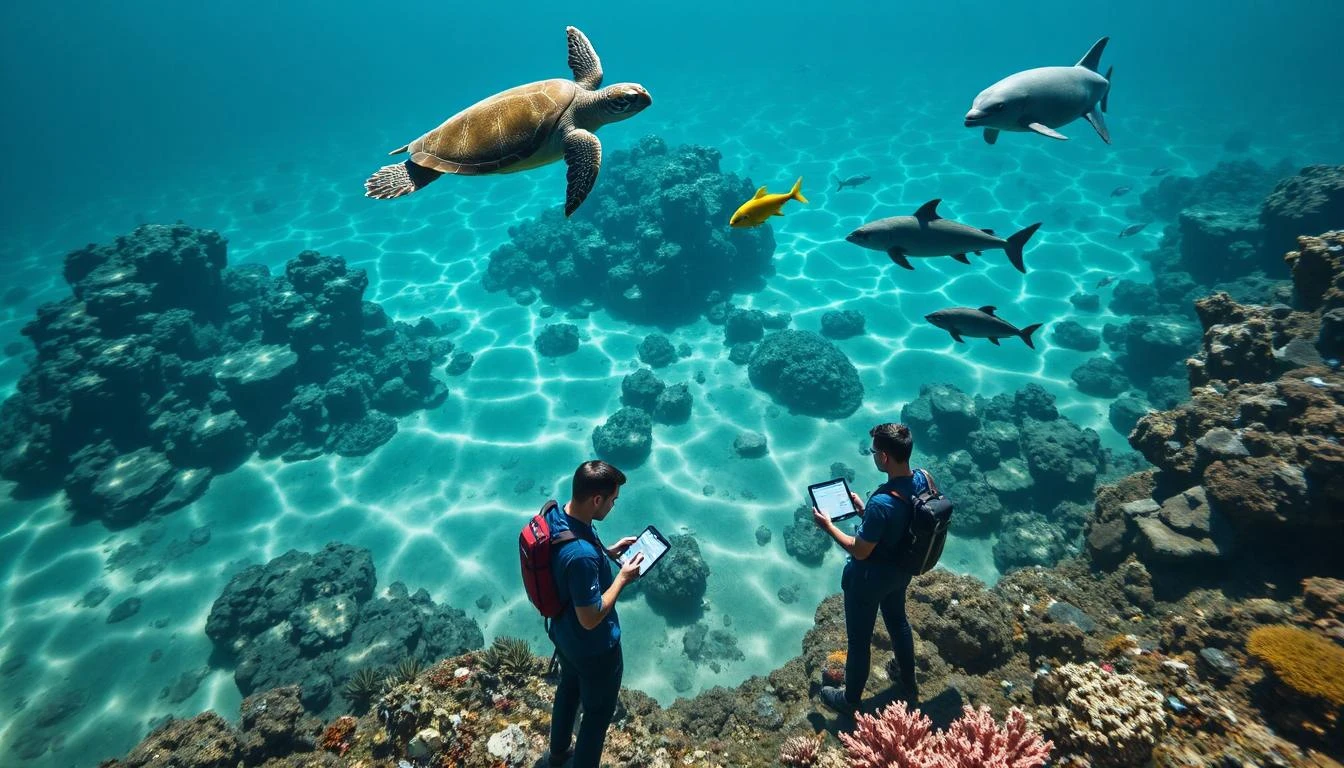
Marine Life Exploration In The Digital Era
The ocean has always carried a quiet mystery, something vast, deep, and endlessly shifting beneath the surface of human understanding. Today, that mystery is no longer locked away in unreachable depths, it is being decoded through screens, sensors, and scientific imagination that continues to evolve every second.
Curiosity toward the sea has entered a new chapter where technology reshapes how people learn, observe, and connect with marine environments. In this modern shift, ocean marine discovery becomes more than exploration, it turns into a global learning movement that blends education, innovation, and environmental awareness into one continuous digital experience.
Marine Life Exploration In The Digital Era
The digital transformation of ocean studies is changing how people interact with marine environments, turning distant ecosystems into accessible learning spaces. This shift is not just about technology, it is about reshaping human perception of the ocean as a living, interactive classroom.
In this evolution, marine life learning exploration plays a central role in bridging scientific knowledge with everyday learning experiences. It allows learners of all ages to engage with marine ecosystems through interactive tools, making ocean science more approachable and meaningful.
Virtual reality experiences of underwater ecosystems
Virtual reality is redefining ocean education by transporting users directly into underwater worlds without leaving their environment. Coral reefs, deep-sea trenches, and marine biodiversity zones can now be experienced in immersive 3D simulations that replicate real-life conditions with remarkable precision. This digital immersion strengthens understanding by turning abstract concepts into lived experiences, helping learners emotionally and intellectually connect with marine ecosystems.
Digital mapping of ocean biodiversity
Ocean biodiversity is now being documented through advanced digital mapping systems that combine satellite data, underwater sensors, and AI modeling. These technologies create dynamic representations of marine habitats, allowing researchers to track changes in ecosystems with high accuracy. Such mapping systems are not only scientific tools but also educational gateways that make complex ecological patterns easier to understand and analyze.
Role of technology in marine research advancement
Technology has become the backbone of modern marine research, enabling scientists to explore deeper, analyze faster, and understand more accurately than ever before. Autonomous underwater vehicles and smart sensing systems now collect data from ocean zones that were once unreachable.
As oceanographer Sylvia Earle once stated, “With every drop of water you drink, every breath you take, you’re connected to the sea.”
Innovations In Modern Ocean Exploration
Modern innovation has pushed ocean exploration into a highly intelligent era where data, automation, and digital visualization work together. The ocean is no longer only explored physically, it is now studied through predictive systems and computational intelligence.
This transformation continues to expand access to knowledge, making marine science more interactive and globally connected than ever before.
AI powered marine species identification
Artificial intelligence is revolutionizing species identification by analyzing underwater images and sonar data to recognize marine organisms instantly. This significantly reduces identification time and improves research accuracy.
Satellite monitoring of ocean environments
Satellite systems now provide continuous monitoring of ocean conditions such as temperature shifts, pollution levels, and current movements. These insights are critical for understanding climate change and its impact on marine ecosystems.
Data visualization of underwater discoveries
Complex marine datasets are transformed into visual models that simplify interpretation for researchers and learners alike. These visualizations turn abstract numbers into understandable ocean narratives.
Importance Of Marine Education And Awareness
Understanding the ocean is no longer optional, it is essential for global sustainability. Education plays a crucial role in shaping how future generations perceive and protect marine ecosystems.
Understanding fragile marine ecosystems
Marine ecosystems are delicate networks that depend on balance and stability. Even small environmental changes can disrupt entire food chains and habitats.
Human impact on ocean biodiversity
Human activity has significantly influenced marine environments through pollution, overfishing, and habitat destruction.
Educational tools for ocean literacy
Digital platforms and interactive tools are making ocean literacy more engaging and accessible through simulations and gamified learning.
Explore And Protect Marine Life Through Digital Innovation Today
The evolution of marine science into a digital ecosystem marks a turning point in how humanity understands the ocean.
Marine educator Dr. David Attenborough once emphasized, “The ocean is the last great wilderness on Earth, and we are only just beginning to understand it.”
That statement reflects the urgency of combining education and technology to protect marine life for future generations.